
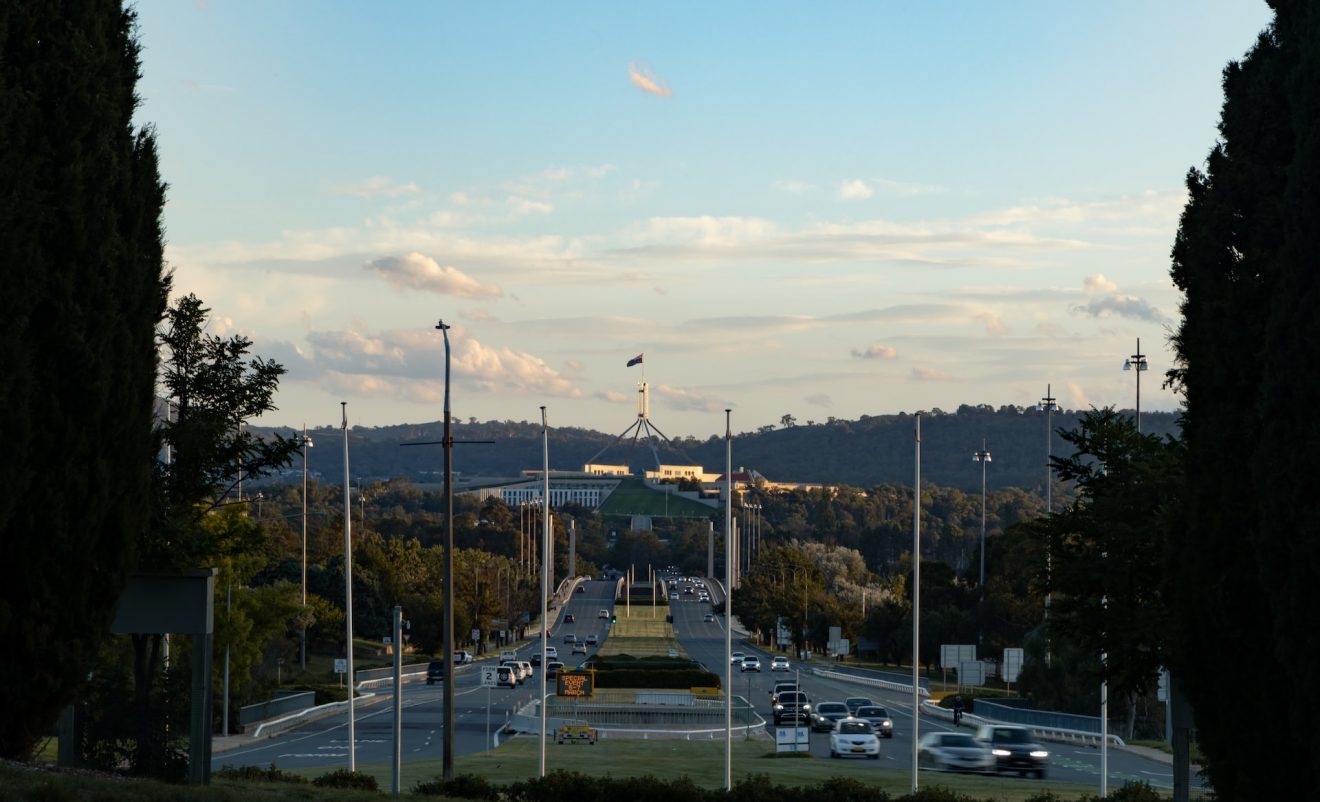
The Australian Capital Territory (ACT) is a good place to live and is home to over 400,000 people. The ACT spans over 2358 square kilometres within the state of New South Wales. It is also the home to many different national institutions of Australia. These institutions include the Parliament House of Australia, Old Parliament House, the National Archives, the National Gallery of Australia, the National Library of Australia, the Australian War Memorial and many more. Canberra came to fruition in 1913 when it was officially named the capital of Australia, when Lady Denman, the wife of the then Governor-General delivered a speech on the official name. The meaning behind the name, Canberra is derived from the local indigenous word for ‘meeting place’.
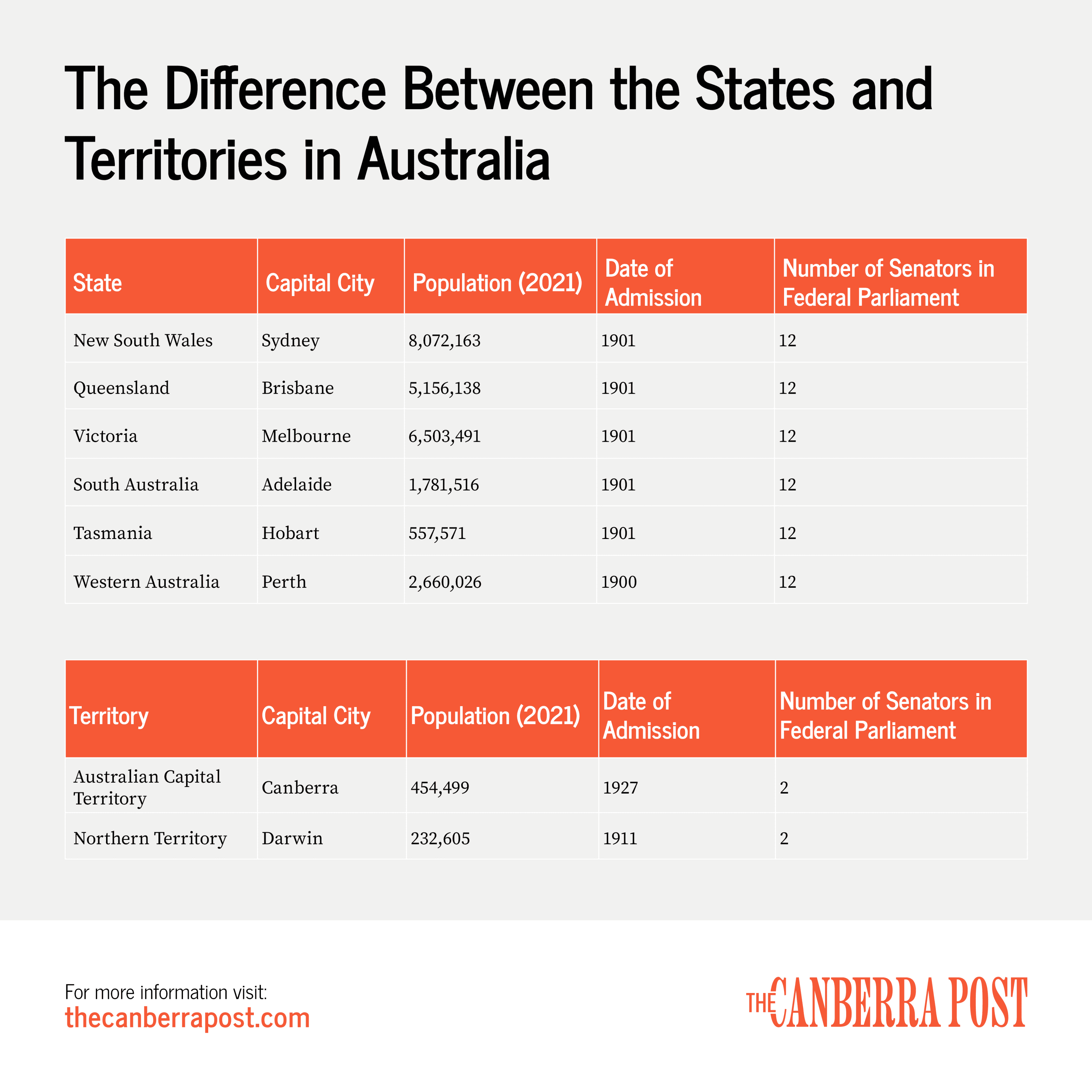
In comparison to the other states and territories, Canberra is the youngest of them all. The other states and territories were mainly established around the federation of Australia in 1901, while Canberra was not admitted as a state or territory until 1927 when Parliament first sat in Canberra at the now Old Parliament House. The question is though, is Canberra a state or territory? Canberra, our capital city is in fact inside a territory rather than a state. Hence the name behind the Australian Capital Territory. Some people do say it’s a state but that is incorrect.
Why is the ACT a territory and not a state?
The states of Australia were created before the Australian Federal Government was created and have had their own state governments since this time. The two territories within Australia being the Northern Territory and the Australian Capital Territory were created after the Australian Federal Government was created and have a difference governing system to the states of Australia. The territories of Australia do not have the same level of power that the states do. The territories do not have legislations to create laws for their own territory without the assistance of the federal government. This means that the Australian Capital Territory relies on the federal government to approve laws that can come into effect in Canberra. The federal government also has the authority to create laws within these territories without consultation with the local government of the territory.
It is interesting to note that the two territories of the Australian Capital Territory and Northern Territory are only allowed to have two senators of parliament per territory. This number is considerably lower than the states of Australia (New South Wales, Queensland, South Australia, Victoria, Tasmania and Western Australia) that are granted 12 senators per state. According to the Commonwealth Electoral Act, the territories are represented in proportions in parliament based on their populations and population quotas. The original states were subject under the same provisions but have surpassed this. Since 1901, the number of members of parliament have grown from 75 people to 151 in recent times. While the territories have a very low number of senators in comparison to the states, Canberran’s do get to have their say on who they would like to be included as a senator within federal parliament.
The members of Parliament closely examine, scrutinise and debate bills, review government decisions, investigate how the government has spent tax-payers money and questioning if the government is acting responsibly when it comes to making decisions for Australians. This all takes place at Parliament House of Australia, perched on top of Capital Hill, within the Parliamentary Triangle in Canberra.
A little bit of random knowledge for you today – did you know that Australia has more than two territories? The Northern Territory and the Australian Capital Territory are considered to be internal territories while they have another six external territories. These territories are the following:
- Norfolk Island
- Coral Sea Islands
- Cocos (Keeling) Islands
- Christmas Island
- Ashmore and Cartier Islands
- Heard Islands and McDonalds Islands.
Australia has also claimed a large part of Antarctica as our own as well. This area is called the Australian Antarctic Territory.